
Kannitverstan
A young craftsman from Germany walks through Amsterdam without a word of Dutch. Every time he asks who owns something wonderful, he gets the same answer: Kannitverstan.
Watch
The story, illustrated
Also on YouTube.
Read along · tap a line to play it
Vor über zweihundert Jahren kommt ein junger Handwerksbursche nach Amsterdam.
More than two hundred years ago, a young craftsman comes to Amsterdam.
二百年以上前、一人の若い職人がアムステルダムにやって来ます。
Er kommt aus Tuttlingen, einer kleinen Stadt in Deutschland. Amsterdam ist groß und voller Menschen.
He comes from Tuttlingen, a small town in Germany. Amsterdam is big and full of people.
彼はドイツの小さな町、トゥットリンゲンの出身です。アムステルダムは大きくて、人でいっぱいです。
Er versteht kein Wort Niederländisch. Aber er sieht sich alles neugierig an.
He doesn't understand a word of Dutch. But he looks at everything with curiosity.
彼はオランダ語が一言もわかりません。でも、全てを興味津々に見て回ります。
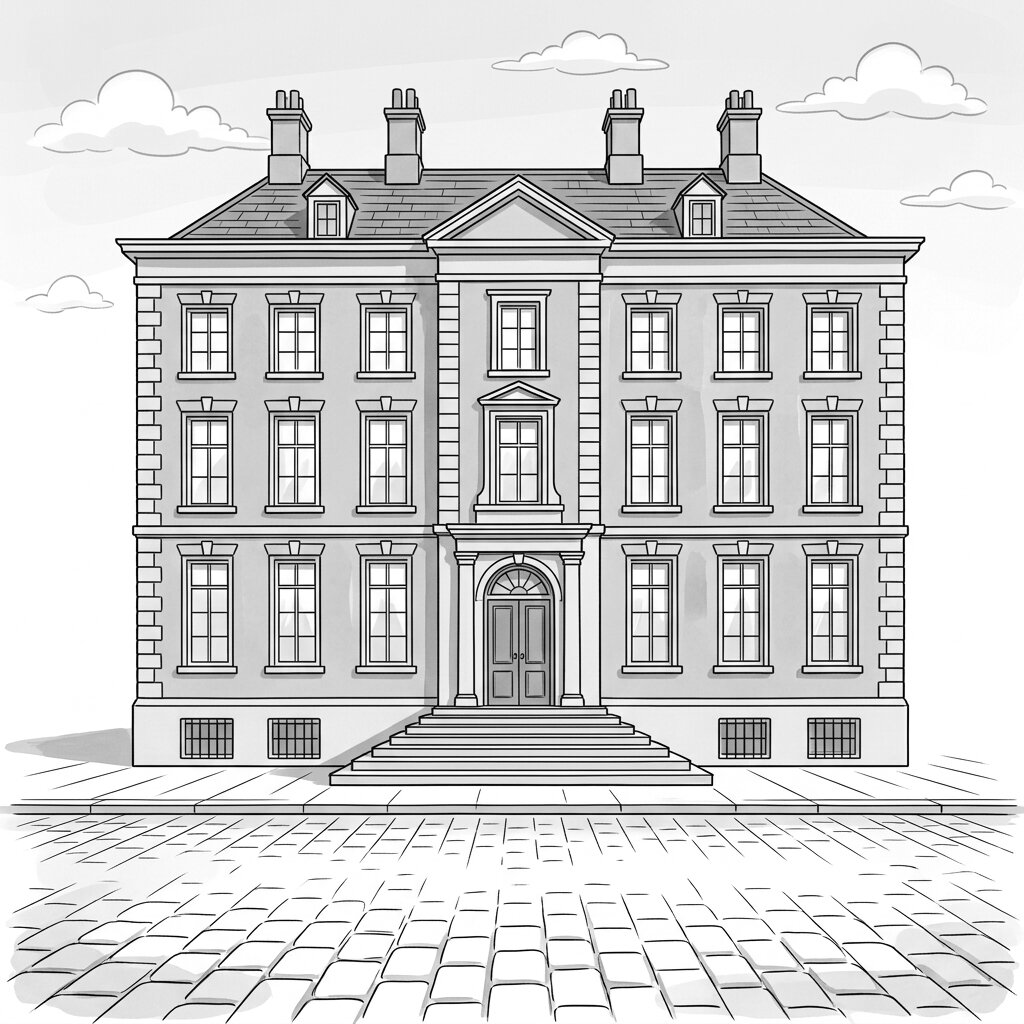
Da sieht er ein wunderschönes Haus. Es ist fast so groß wie ein Schloss. Es hat sechs Schornsteine und große, glänzende Fenster.
Then he sees a beautiful house. It is almost as big as a palace. It has six chimneys and big, shining windows.
そのとき、とても美しい家が目に入ります。お城のように大きな家です。煙突が六本あり、大きな窓がぴかぴか光っています。
So ein schönes Haus! Wem gehört es wohl?
“What a beautiful house! Who does it belong to, I wonder?”
「なんて美しい家だろう!いったい誰の家なんだろう?」
Ein Mann kommt vorbei. Der Bursche nimmt seinen Hut ab und fragt höflich:
A man walks by. The craftsman takes off his hat and asks politely:
一人の男の人が通りかかります。職人は帽子を取って、丁寧に尋ねます。
Entschuldigung, mein Herr! Wem gehört dieses schöne Haus?
“Excuse me, sir! Who does this beautiful house belong to?”
「すみません!この美しい家は、どなたのものですか?」
Kannitverstan.
“Kannitverstan.”
「カンニットフェルスタン」
Der Mann geht schnell weiter. „Kannitverstan“ ist Niederländisch und heißt: „Ich kann Sie nicht verstehen.“ Aber das weiß der Bursche nicht.
The man walks quickly on. “Kannitverstan” is Dutch and means “I can't understand you.” But the craftsman doesn't know that.
男の人は足早に去っていきます。「カンニットフェルスタン」はオランダ語で「あなたの言うことがわかりません」という意味です。でも、職人はそれを知りません。
Kannitverstan! So heißt also der reiche Mann. Herr Kannitverstan!
“Kannitverstan! So that is the rich man's name. Mr Kannitverstan!”
「カンニットフェルスタン!それが、このお金持ちの名前なんだ。カンニットフェルスタンさん!」
Dann geht er zum Hafen. Dort liegt ein großes Schiff aus Ostindien.
Then he goes to the harbour. A big ship from the East Indies lies there.
それから彼は港へ行きます。そこには、東インドから来た大きな船が泊まっています。
Männer tragen Kisten, Säcke und Fässer vom Schiff: Kaffee, Zucker, Reis und Pfeffer.
Men carry crates, sacks and barrels off the ship: coffee, sugar, rice and pepper.
男たちが船から箱や袋や樽を運び出しています。コーヒー、砂糖、米、そしてコショウです。
Entschuldigung! Wem gehört dieses Schiff mit all den Waren?
“Excuse me! Who does this ship with all the goods belong to?”
「すみません!荷物でいっぱいのこの船は、どなたのものですか?」
Kannitverstan.
“Kannitverstan.”
「カンニットフェルスタン」
Schon wieder Herr Kannitverstan! Er hat ein Haus wie ein Schloss und ein Schiff voller Waren. Und ich? Ich habe nichts.
“Mr Kannitverstan again! He has a house like a palace and a ship full of goods. And me? I have nothing.”
「またカンニットフェルスタンさんだ!お城のような家と、荷物でいっぱいの船を持っているんだ。それなのに、僕は?僕には何もない。」
Der Bursche wird traurig. Warum ist er so arm? Und warum ist dieser Mann so reich?
The craftsman feels sad. Why is he so poor? And why is this man so rich?
職人は悲しくなります。どうして自分はこんなに貧しいのだろう?そして、どうしてあの人はあんなにお金持ちなのだろう?
Traurig geht er durch die Straßen. Da kommt ihm ein langer Trauerzug entgegen.
Sadly, he walks through the streets. Then a long funeral procession comes towards him.
悲しい気持ちで、彼は通りを歩きます。すると、長い葬列が向こうからやって来ます。
Vier schwarze Pferde ziehen einen schwarzen Wagen. Auf dem Wagen steht ein Sarg.
Four black horses pull a black carriage. On the carriage is a coffin.
四頭の黒い馬が、黒い馬車を引いています。馬車の上には、棺が載っています。
Viele Menschen in schwarzen Mänteln gehen langsam hinter dem Wagen. Niemand spricht. Eine Glocke läutet.
Many people in black coats walk slowly behind the carriage. Nobody speaks. A bell is ringing.
黒いコートを着たたくさんの人が、馬車のうしろをゆっくり歩いています。誰も話していません。鐘が鳴っています。
Der Bursche bleibt stehen und nimmt seinen Hut ab. Er fragt einen Mann leise:
The craftsman stops and takes off his hat. He quietly asks a man:
職人は立ち止まって、帽子を取ります。そして、一人の男の人に小さな声で尋ねます。
Entschuldigung, wer ist denn gestorben?
“Excuse me, who has died?”
「すみません、どなたが亡くなったのですか?」
Kannitverstan.
“Kannitverstan.”
「カンニットフェルスタン」
Dem Burschen kommen fast die Tränen.
The craftsman almost cries.
職人は、もう少しで泣きそうになります。
Armer Herr Kannitverstan! Du hattest ein Haus wie ein Schloss und ein Schiff voller Waren. Und jetzt? Jetzt hast du nur noch einen Sarg, wie jeder arme Mann.
“Poor Mr Kannitverstan! You had a house like a palace and a ship full of goods. And now? Now you have only a coffin, like every poor man.”
「気の毒なカンニットフェルスタンさん!お城のような家と、荷物でいっぱいの船を持っていたのに。それが今は?今は、貧しい人とも同じように、棺ひとつしかないんだ。」
Der Bursche geht mit bis zum Friedhof. Dort hört er eine Predigt auf Niederländisch.
The craftsman goes along to the cemetery. There he listens to a sermon in Dutch.
職人は、墓地まで一緒について行きます。そこで、オランダ語で説法を聞きます。
Er versteht kein Wort. Aber er hört besser zu als manche Leute in der Kirche zu Hause.
He doesn't understand a word. But he listens better than some people in church at home.
彼には一言もわかりません。でも、故郷の教会にいるような人たちよりも、よく耳を傾けています。
Dann geht er mit leichtem Herzen weiter. Er ist nicht mehr traurig.
Then he walks on with a light heart. He is not sad any more.
それから彼は、少し心が軽くなって歩き出します。もう悲しくはありません。
Und wenn er später wieder denkt: „Warum sind andere so reich und ich so arm?“,
And when he later thinks again, “Why are others so rich and I so poor?”,
そして、あとでまた「どうしてほかの人はあんなにお金持ちで、自分はこんなに貧しいのだろう?」と思うことがあると、
dann denkt er an Herrn Kannitverstan: an sein großes Haus, sein reiches Schiff und sein enges Grab. Und er ist zufrieden.
then he thinks of Mr Kannitverstan: his big house, his rich ship and his narrow grave. And he is content.
カンニットフェルスタンさんのことを思い出します。大きな家、豊かな船、そして狭いお墓のことを。そして、納得するのです。
Ende.
The End.
おわり。
Listen
The podcast episode
- SpotifyNovella German PodcastListen ↗
- Apple PodcastsNovella German PodcastListen ↗
- Any other podcast appAdd the show by its address (RSS):
https://novellalanguages.com/german/podcast.xml
Read along